

These days, theft isn’t necessarily a matter of “If” but rather a matter of “When”. The reality is, you can spend a little bit time and energy organizing your equipment and creating the records you will most likely need and rely on at some point. Or, you can spend a much greater amount of time, money and energy after a loss sends you reeling with the helpless realization that you aren’t adequately equipped to do much about it. The more you prepare before disaster strikes, the more proactive you can be if/when the inevitable happens. As a construction industry, we typically let people get away with theft because we don’t know how to organize our records, or care to take the time necessary to do it. This is the equipment you rely on to make a living. Unfortunately, the sting of losing that equipment is not fully appreciated until after you’ve experienced theft.
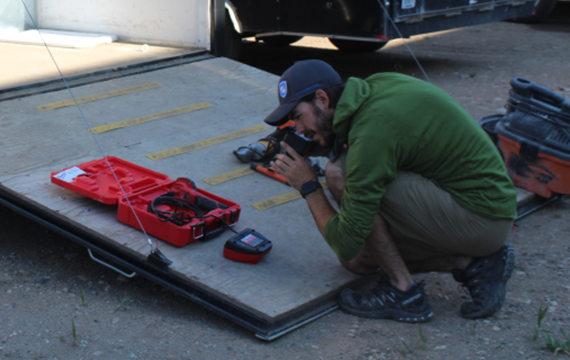
Take me, for example. I got into construction because I like to build. I love framing, layout putting walls together, flying trusses. Using my hands, working hard, and heading home at the end of the day looking at the product of my hard work believing that much of it will outlast my existence. Learning how to run a business came secondary. That approach to running a business typically meant there were a lot of lessons I learned the hard way. By making mistakes. Lots of them. All at my expense. Until my jobsite got hit, I never appreciated the importance of organizing my equipment and never fully understood that keeping good records is actually an effective means to protecting it.
As you all know, losses can take any form. An employee forgetting to pack up a battery and charger at the end of the day, a Sawzall innocently and mistakenly taken by another sub on the job, or even a full-blown hit in the middle of the night on a job box or work trailer with locks cut and shelves completely ransacked. Because theft takes all forms, and construction companies range in size, there is no perfect, one-size-fits-all solution, but everything you do to protect your equipment helps you minimize the pain when theft does happen to you.
Searching online for ideas to prevent theft results in a constant faucet of articles, blogs and forums offering sage pointers on how best to protect your tools. Most recommendations coming from someone who’s felt the pain personally, or someone who is selling a product to help combat theft.
I’m most interested in what the “experts” have to say. I chose 16 articles about preventing tool theft and will compare all recommendations to see which methods are the most commonly recommended, then pass those nuggets on by ranking the results in order of common mentions.
To help guide you to the best solution that fits your needs and your budget, start by asking yourself:
“How much money have I spent on tools?”
“What would it cost me to replace my tools?”
“How much time would it take to replace my equipment?”
“If my jobsite was hit tonight, how effectively and accurately could I report my losses?”
“How much would theft insurance cost me, and how much would it cover?”
How much time off the jobsite would I lose trying to gather the information to report my losses, hunting the local pawn shops for my tools, and replacing what is gone?
Because when you show up and your tools are gone, that is the real stinger.
So lets get to the results.
Coming in fifth place with 5 common recommendations in the 16 articles is
5. Add GPS trackers. This is agreat tool if you have one or more trailers chockfull of tools and you are leaving a substantial amount of equipment on one or more jobsites. GPS trackers can usually be added with little effort and can be less expensive than a full-blown security system (or simply one component of a security system). Here again, if you want law enforcement to do all they can to help you recover your stolen goods, having an accurate list of equipment that includes photos, models, and serial numbers is absolutely essential. So, make sure to do your homework and compare the various GPS trackers and tracker systems, and do not rely solely on this as your single line of defense against theft.
Certainly not the least expensive recommendation on the list comes in with 8 out of 16 mentions.
4. Add a security system. This was a creative batch of suggestions covering the full spectrum of ideas from mounting trail cams in trailers, to getting a dog, to adding motion-sensors with sirens and alarms, to full blown professional surveillance monitoring security systems. Again, the creativity is endless, and the cost is all over the board, so the main question that begs to be asked when selecting a security system, is what are your tools worth to you? What would it cost to replace them? How much time would that involve? Here again, sometimes security cameras can capture the actual crime, but without the tool records, relying on a security camera alone isn’t always a fool-proof method.
The third most common recommendation, still very popular with 11/16 mentions is the tried-and-true method of getting creative with your tools.
3. Give your tools a make-over/ engrave them with company information. If you’ve spent any time on a construction site, you’ve seen it all. Gold tools, purple tools, burnt, cut, branded tools, and the likes. The recommendations here range from painting tools with the least manly colors you can find, to purchasing an inexpensive engraver so you can add anything from a business name to personal contact info on your tools. If you find yourself on jobsites with a lot of other subcontractors, spray painting a bright dot onto your tools is a great visual to help keep your tools differentiated from other trades because tools can and often do get mixed up and mistakenly taken. Getting creative here is always half the fun, but without a good inventory, even this is not a full-proof method, so make sure you have the records to back it up!
The second most common recommendation comes in with 12/16 mentions.
2. Keep a good inventory. Accurate, complete inventories should include Manufacturer, Model, Serial Number, and corresponding photos of the tools. Depending on your capacity to manage everything from Excel spreadsheets to generating and organizing photographs of tools, photos of receipts, these records can take on a variety of looks. Many tool manufacturers offer simplified tool tracking programs to help you create these records, but many times the comments suggest these services require a lot of time to set up. There are also several different tool tracking programs available with a variety of pricing options and this will be the next topic we dive into.
And, believe it or not, the most popular recommendation is unanimously advised in all 16 articles and is the most basic of all.
1. Lock them up. Securing tools at night is the best way to keep them from growing legs. If you have dozens of tools floating around a jobsite, it may make sense for you to invest in a heavy-duty job box. When possible, keep it inside, and use good a lock. If that is not possible, taking your tools home with you is always a good back up plan. Keep them locked, or better yet, in your garage. If that isn’t possible, and you leave a lot of tools in a work van, one recommendation was to throw an old blanket over them, out of sight, out of mind. Sometimes, adding a notice to your work vehicles or trailers that your tools are registered is just enough to keep honest people honest.
Believe it or not, taking the time to mark your tools and create a complete list of equipment not only helps you put a plan in place that gives you peace of mind knowing you can respond proactively rather than reactively to any adverse situation. It also gives you all the information that can usually help you save money on theft insurance. Afterall, minimizing your chances of loss and reducing the pain in the event of loss is the true goal.
From my own experience, I can tell you that the amount of energy you spend on prevention is directly proportionate to the amount of pain you can minimize when it comes time to filing reports, searching pawnshops and replacing lost tools. As a general contractor, I made the mistake of doing nothing. In the end it cost me more time and money than if I had good records. I hope your fate is different than mine. That’s why I built PowerTool Safe. So you can have a better option that hopefully leads to a better outcome.
Limit your losses, minimize the pain, and stay safe out there.
Paul Bierman, founder